★★★★★ TrustMark registered No-obligation survey Fully insured & guaranteed
Call us: 0191 283 5085
Structural safety

Wall tie replacement

The metal ties holding your two walls together corrode over time. Left unchecked it’s a serious structural risk — we inspect, replace and reinforce.

★★★★★Trusted · by North East homeowners
★★★★★ Rated by North East homeowners
TrustMark registeredNo-obligationFully insuredLocal NE team
No obligation

Book your survey

Tell us your postcode and we'll arrange a no-obligation inspection.

Private & no obligation · we’ll call you back

Cavity walls are built as two separate leaves of brickwork held together by metal wall ties bedded across the gap. Those ties are doing a crucial structural job — and when they corrode, they expand, crack the mortar and lose their grip. In the worst cases the outer wall can begin to bow or bulge.

Older ties, and ties in exposed or coastal North East properties, are particularly prone to rust. The classic warning signs are regular horizontal cracks in the mortar beds (often every six courses or so), bulging brickwork, or ties visibly failing where the cavity has been opened up.

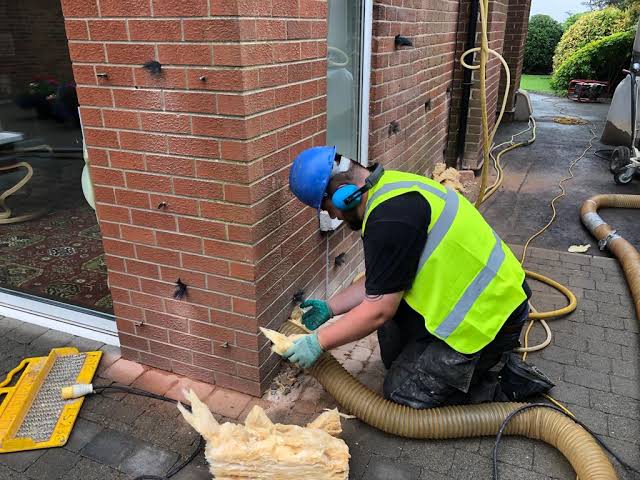
Wall tie replacement is a specialist remedial job. We survey the cavity, identify failed or failing ties, and install new corrosion-resistant ties to tie the walls safely back together — often alongside extraction, because a cavity that’s being cleared is the ideal time to check the ties.
Warning signs

Signs of wall tie failure

Spot these and get a survey — it’s a structural issue, not a cosmetic one.

Horizontal cracks

Regular cracks in the mortar beds, often at even spacing up the wall.

Bulging walls

Outer brickwork starting to bow or bulge as corroded ties expand.

Rusted ties

Visibly corroded ties where the cavity has been opened for inspection.

Coastal exposure

Salt-laden air on the North East coast accelerates tie corrosion.

Older property

Homes built with early galvanised ties that have reached the end of their life.

Found on survey

We check wall ties with a borescope as standard on cavity surveys.

How wall tie replacement works

We start with a proper inspection, using a borescope to see the condition of the existing ties inside the cavity. If they’re failing, we install new corrosion-resistant remedial ties at the correct spacing to restore the structural connection between the two walls — and, where needed, isolate the old ties so they can’t cause further damage.

Because it’s structural work, it’s not something to put off or patch over. The good news is that caught in time it’s very fixable, and it’s efficient to combine with cavity extraction while the walls are being worked on.

  • Borescope inspection of existing wall ties
  • New corrosion-resistant remedial ties installed
  • Correct spacing to restore structural integrity
  • Old failed ties isolated where needed
  • Ideal to combine with cavity extraction
  • Fully insured, guarantee-backed structural work
Get a survey
Wall tie <span class=replacement" loading="lazy">
FAQs

Wall tie replacement — common questions

How serious is wall tie failure?
It’s a structural issue, so it shouldn’t be ignored — corroded ties can crack mortar and, in bad cases, cause walls to bulge. Caught early it’s straightforward to fix.
How do you check the wall ties?
We use a borescope to inspect the ties inside the cavity, so we can see their real condition rather than guessing from the outside.
Can you do this at the same time as extraction?
Yes — when the cavity is being cleared it’s the perfect opportunity to inspect and replace ties, saving time and disruption.
More of what we do

Related services

Book your no-obligation survey

We'll inspect your walls inside and out, show you what's really going on with a borescope, and give you honest advice and a fixed price.

Call us Book a Survey